
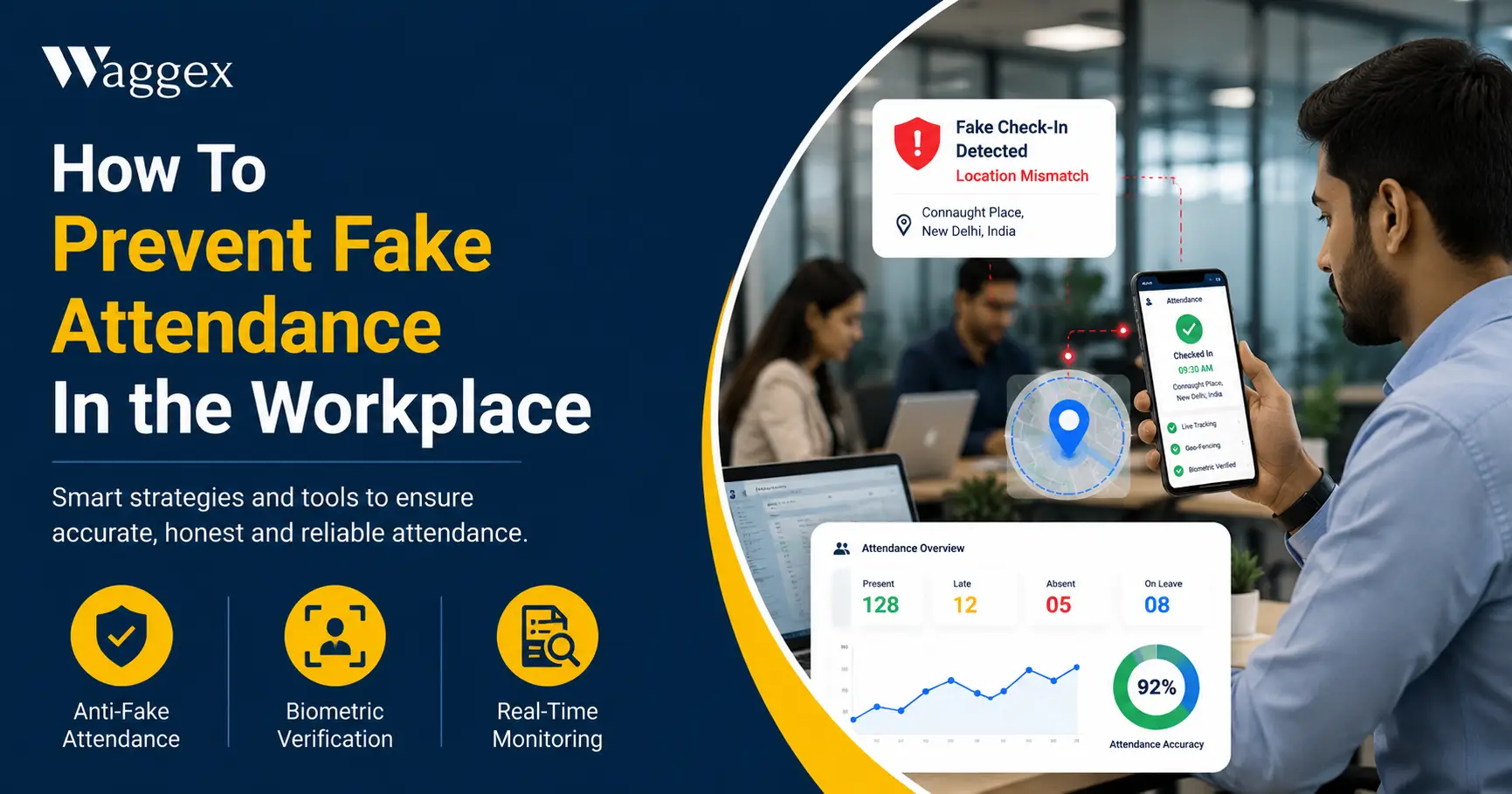
Nobody talks about this openly, but it happens in almost every organisation. An employee asks a colleague to sign their name in the register because they’re running 20 minutes late. A field executive’s phone shows him checked-In at the client’s office while he’s still having breakfast at home. Two employees at the factory gate take turns swiping each other’s cards.
It has a name: buddy punching. Or proxy attendance. Or time theft. The term changes depending on the industry, but the outcome is the same you’re paying for hours that weren’t worked.
The scale of it surprises most business owners when they first look at the numbers. The American Payroll Association estimates that buddy punching affects 75% of companies and costs an average of 2.2% of gross payroll annually. For an Indian company with 500 employees and a monthly payroll of ₹2 crore, that’s roughly ₹4.4 lakh walking out the door every month ₹52 lakh a year. And it compounds silently because manual attendance systems rarely flag it in real time.
In May 2025, the Madhya Pradesh Treasury flagged a ₹230 crore ghost employee fraud case after uncovering payroll discrepancies in a state government system. That’s an extreme case, but the underlying mechanism for attendance records that nobody verified is the same one playing out in smaller amounts in businesses across India every month.
This article covers the types of fake attendance happening in Indian workplaces, why traditional systems don’t catch them, and what actually fixes the problem.
The Different Types of Fake Attendance and Why They’re Hard to Catch
- Buddy Punching
This is the most common one. Employee A is running late. Employee B who’s already at the office swipes Employee A’s card, signs their name in the register, or punches their biometric card on their behalf. The attendance record looks clean. The manager never knows. It happens once, then twice, then it becomes routine.
A manufacturing firm in India was found to have widespread buddy punching across multiple employees; the annual cost to the business was over ₹10 lakh by the time it was discovered. The ACFE (Association of Certified Fraud Examiners) places average detection time for payroll fraud at 24 to 36 months under manual systems. That’s two to three years of unchecked losses before the first flag.
- Fake GPS and Location Spoofing
This one is specific to mobile and app-based attendance and it’s more widespread than most managers realise.
Android’s developer settings allow any user to install a mock location app and set any GPS coordinates they want sitting at home, they can make their phone report that they’re standing at the client’s office. These apps are free, available on the Play Store, and take about 30 seconds to set up. Within a week of introducing GPS attendance for the first time, at least a few tech-savvy employees will have tested this.
The check-in looks legitimate. The GPS coordinates show the right location. The timestamp is correct. Without server-side validation that independently verifies location data cross-checking GPS against IP address, network signals, device integrity flags, and developer option status the system records a fraudulent check-in as genuine.
- Manual Register Manipulation
Old-school but still common, especially in businesses still using paper attendance or Excel sheets. Colleagues sign for each other, late arrivals write earlier arrival times, supervisors approve sheets they didn’t monitor. There’s no verification layer the only check is whether the signature looks right.
A retail shop was found to have workers manipulating break times systematically small adjustments per person per day that added up to a material payroll overpayment across the team. None of it was visible in the register because the register had no timestamp verification.
- Proxy Attendance for Field Teams
This is a variation on buddy punching that GPS-only systems don’t fully solve. If an employee asks a colleague who’s near the approved location to check in from the correct site using their phone, GPS confirms the right location but can’t confirm who’s holding the device. The attendance record shows the correct place with the wrong person.
- Ghost Employees
At the extreme end: payroll paid to employees who don’t exist, or to employees who have left but whose records were never closed. This happens when attendance records and payroll are in separate systems with poor reconciliation someone can remain on payroll long after they’ve left the building. The ₹230 crore MP Treasury case was ghost employees at government scale. The same mechanism operates in smaller amounts in private businesses with disconnected HR systems.
| The common thread across all these types: They survive because attendance data and payroll data live in separate places, with a manual step in between that nobody cross-checks in real time. The solution isn’t stricter managers it’s a system that makes fraud technically impossible to complete, not just theoretically against the rules. |
Why Traditional Attendance Systems Keep Failing
Most businesses that struggle with fake attendance aren’t missing willpower, they’re missing the right system. Here’s why common approaches fall short:
- Paper registers and Excel: No verification layer at all. Anyone can write anything. Timestamps are added by the person filling the sheet, not captured automatically. Easy to edit, easy to lose, impossible to audit in real time.
- Biometric fingerprint devices: Good at preventing buddy punching for office staff at a fixed location. But fingerprint cards can be cloned or shared. They provide zero coverage for field employees, remote workers, or anyone not standing in front of the machine. And they offer no GPS verification they confirm identity but not location.
- Basic GPS apps without anti-spoofing: Tells you where the phone is not whether that location is real. A mock location app defeats a GPS attendance system that only reads the phone’s reported coordinates without independently validating them. The system shows the right location; the employee is somewhere else entirely.
- Disconnected attendance and payroll: Even when attendance is tracked accurately, if that data is manually transferred to a payroll system, the transfer step creates opportunities for manipulation. Someone can edit the export file before it’s imported. Or the import simply doesn’t happen for a few employees, who then get manual corrections that are never audited.
How to Actually Prevent Fake Attendance What Works
Layer 1 Verify Identity, Not Just Presence
The first gap in most systems is that they confirm a device checked in from a location not that a specific person did. Closing this gap requires identity verification at check-in. In practice, this means:
- Face recognition at check-in: The employee’s selfie is matched against their registered face photo in real time. A colleague cannot check in on their behalf because their face won’t match. A photo of the absent employee won’t work either live capture with liveness detection flags static images.
- No shared credentials: PINs and cards can be shared. Faces can’t. Any attendance method that uses a transferable credential will eventually be shared.
Layer 2 Validate Location Server-Side, Not Device-Side
GPS attendance that trusts what the phone reports can be defeated with a free mock location app. The fix is server-side validation when an employee checks in, the location data is sent to the server, which independently cross-checks it against the device’s IP address, network signals, developer option status, and known mock location indicators. If the coordinates look manipulated, the check-in is blocked before it ever enters the attendance record.
This is a meaningful technical distinction. A system that logs a warning when mock GPS is suspected is an auditing tool a manager has to review it manually. A system that blocks the check-in entirely is an enforcement tool the fraud can’t complete regardless of whether anyone is watching.
Layer 3 Use Geofencing to Define Approved Zones
Geofencing draws a boundary around approved locations office premises, a client site, a warehouse. Employees can only check in when they’re physically inside that boundary. Even with a valid face match, a check-in from outside the approved zone is rejected. For businesses with fixed locations, this removes the location-fraud vector entirely.
For field teams with variable locations visiting different client sites each day managers can configure temporary geofences for specific visits, or use GPS with server-side validation rather than fixed zones.
Layer 4 Make Payroll Flow from Attendance Automatically
If attendance data and payroll are in the same system, there’s no manual transfer step where manipulation can occur. Every verified check-in feeds directly into the employee’s working-days record. LOP deductions calculate from actual leave data. Overtime comes from timestamped shift records. Nobody handles a spreadsheet between attendance and salary.
When payroll is based on verified, system-generated attendance data not on data that passed through a manual step the reconciliation layer where ghost employees and edited records survive is removed.
Layer 5 Maintain a Real-Time Audit Trail
Every check-in should be logged with a timestamp, GPS coordinates, the face image captured, and the device ID all stored on the server and not editable by the employee or their direct manager. This creates a verifiable audit record that supports any investigation after the fact, and that employees know exists from day one, which is itself a deterrent.
How Waggex Addresses Each Type of Fake Attendance
Each of the five problems described above has a specific technical response in Waggex. Here’s how they work in practice:
FaceLens Eliminating Buddy Punching
Waggex’s Selfie Attendance powered by FaceLens requires each employee to take a selfie at check-in. The image is matched in real time against their registered face on Waggex’s server. The match has to pass before the attendance record is created. A colleague cannot check in for someone else their face won’t match. A photo of the absent employee won’t pass liveness detection. This is the same verification layer used in India’s Aadhaar-based face authentication systems, applied to daily attendance.
There’s no hardware to buy or maintain. The front camera on the employee’s existing phone is the device. For a business with offices in three cities, this replaces three biometric installations with one app download.
Server-Side GPS Validation Blocking Fake Location Check-ins
Waggex’s Geo-Location Attendance doesn’t just read the GPS coordinates the phone reports. Every check-in is transmitted to Waggex’s servers over India’s 4G/5G network in real time, where the location data is cross-validated independently. If developer options are enabled on the device, or if a known mock location app is running, or if the coordinates don’t match the network and IP data the check-in is blocked. The employee gets an error. The fraud doesn’t enter the system.
Because check-ins require an active network connection to complete, there is no locally-stored record that can be backdated or manipulated. The server receives, validates, and records in one step. What the phone says is not the final word what the server independently verifies is.
Live Location Tracking Visibility Throughout the Day
For field teams, a check-in is just the beginning of the day. Waggex’s Live Location Tracking shows managers where each field employee actually is throughout working hours not just when they started. This addresses the scenario where an employee checks in legitimately from a client site, then disappears for three hours. Managers see real-time movement, visit trails, and time spent at each location.
Direct Payroll Connection No Manual Transfer, No Ghost Employee Gap
In Waggex, attendance and payroll are the same system not two systems integrated. Every verified check-in feeds directly into the employee’s working-days count for that month. PF, ESI, TDS, and Professional Tax calculate from that verified number. There’s no export file, no import step, no spreadsheet that someone processes in between. An employee whose record is closed in the system stops accruing attendance and payroll simultaneously the ghost employee gap doesn’t exist.
Timestamped, Uneditable Audit Log
Every action in Waggex check-in, check-out, leave approval, payroll run, salary revision is timestamped and server-logged. Employee-level records cannot be edited after the fact by the employee or their direct manager. This creates the audit trail that compliance requirements and internal investigations both depend on.
Fraud Type, Weakness, and Solution At a Glance
Here’s how each type of fake attendance maps to the system weakness that allows it and the specific response.
| Fraud Type | How It Happens | Old System’s Weakness | How Waggex Stops It |
|---|---|---|---|
| Buddy punching | Employee A marks attendance for Employee B who hasn’t arrived yet | No identity check biometric card or PIN can be shared | FaceLens face match only the actual employee can check in |
| Fake GPS / location spoofing | Free apps on Android let employees set a fake location from home | GPS-only systems trust whatever the phone reports | Server-side validation cross-checks location data blocked before it logs |
| Manual register fraud | Colleagues sign for each other, or late arrivals backdate entries | Paper registers have no verification layer at all | Digital check-ins are timestamped and server-locked cannot be edited |
| Proxy attendance (field) | A field employee asks a colleague nearby to check in from the correct site | GPS confirms location but not who is holding the phone | Selfie + GPS together location and identity verified simultaneously |
| Early check-out or time theft | Employee marks check-out late without actually being present | No real-time visibility of who is still on site | Live location tracking and shift-based check-in/out rules |
| Ghost employees | Payroll paid to ex-employees or fabricated employee records | Manual payroll with poor audit trails | Single system any active payroll record tied to a verified attendance history |
Practical Steps to Prevent Fake Attendance in Your Business
Technology is the foundation but the rollout matters as much as the tool. Here’s how to do this without damaging team trust:
- Announce the change before you make it. Tell your team that attendance is moving to a verified system face match, GPS, or both. Explain that it’s about accurate payroll and fairness, not surveillance. Most employees who aren’t committing fraud will welcome it because it protects them from being accused of something they didn’t do.
- Be specific about what is and isn’t tracked. If you’re only tracking attendance check-in and check-out, say so. If you’re also doing live location for field teams, explain the business reason. The employees who feel watched without explanation are the ones who eventually resent the system and look for ways around it.
- Choose a system where fraud is blocked, not just logged. If your attendance tool generates a warning when mock GPS is detected but still records the check-in pending manager review, you’re creating audit records, not preventing fraud. You want the check-in to fail not a flag that requires daily manual review to catch.
- Connect attendance to payroll from day one. The value of verified attendance data is lost if it gets manually transferred to a separate payroll system where it can still be edited. Run both on the same platform so the chain of custody from check-in to salary payment is unbroken.
- Run a one-month pilot before full rollout. Test with one team or one location. Edge cases surface in the first few weeks GPS accuracy at specific sites, face match issues under poor lighting, field employees whose phone models create problems. Resolve these before the whole company is on the system.
| What happens after you close these gaps: Businesses that switch from manual or biometric-only systems to verified digital attendance consistently see payroll accuracy improve in the first month. Not because their employees were dishonest, most weren’t. But because the system was never designed to catch the small, routine adjustments that accumulate invisibly over time. |
The Bottom Line
Fake attendance isn’t a trust problem, it’s a system design problem. When attendance is tracked by a paper register that anyone can write in, or by a GPS app that trusts whatever the phone reports, or by a biometric card that can be handed to a colleague, fraud isn’t a risk, it’s an inevitability. Not because your team is dishonest, but because the system has no enforcement layer.
The fix is straightforward: an attendance system that verifies identity and location simultaneously, validates both on a server rather than trusting the device, blocks fraudulent check-ins before they enter the record, and connects directly to payroll so there’s no manual step where manipulation can occur.
That’s what Waggex is built to do GPS check-in with server-side validation, FaceLens face match for identity, live location tracking for field teams, and direct payroll connection so verified attendance becomes accurate payroll automatically. If you’re still managing attendance on spreadsheets or a basic GPS app and you’re not sure how much it’s costing you, start a free trial at waggex.com and run one real payroll cycle. The difference in what the verified data shows versus what your current system has been recording is usually the clearest answer you’ll get.