

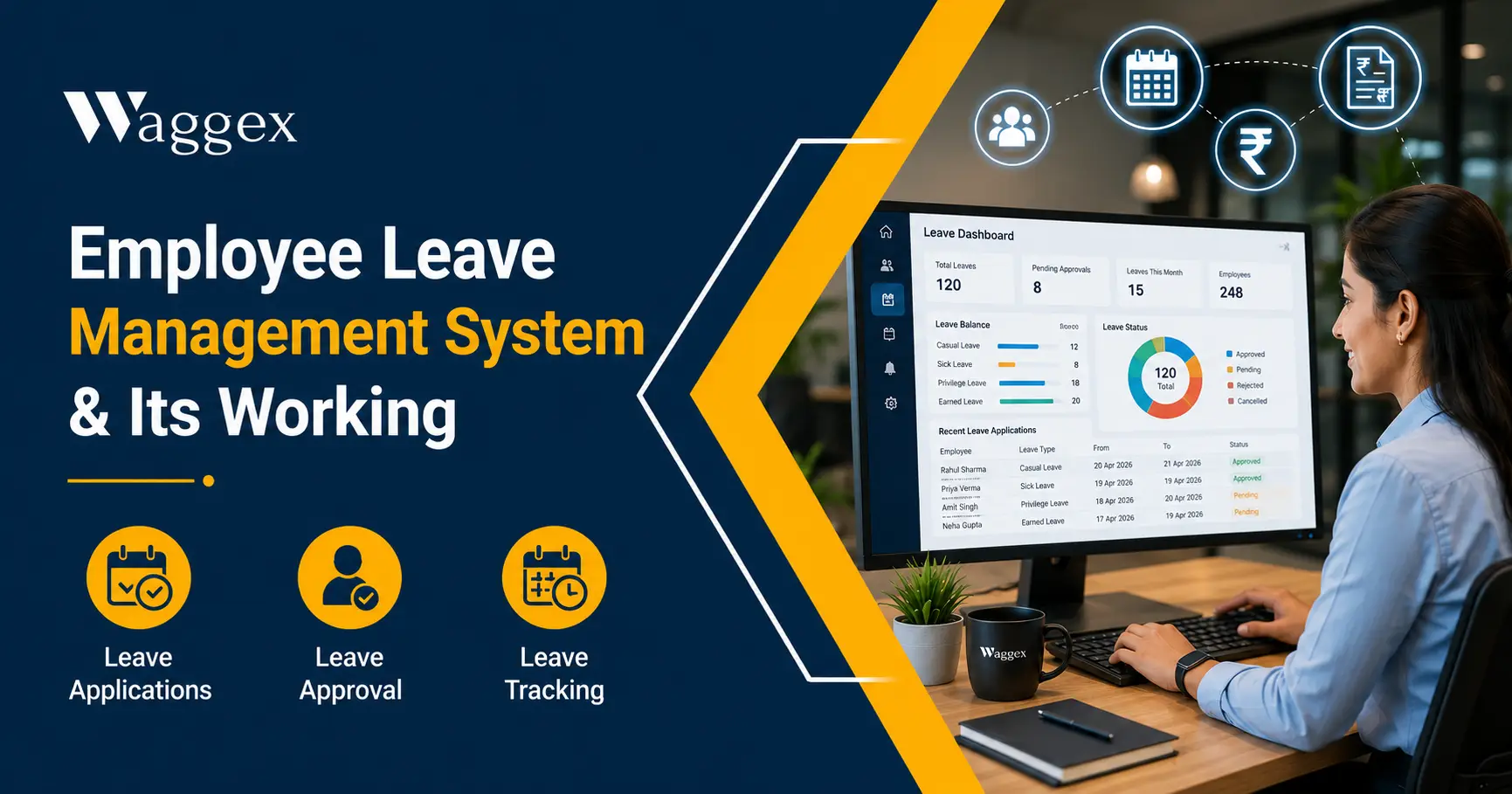
Most HR teams in India spend more time managing leaves than they realise. An employee applies on WhatsApp. The manager approves over chat. HR updates a spreadsheet. Someone forgets to mark the leave without pay before payroll runs. The employee gets the wrong salary. HR corrects it. Everyone’s annoyed.
Repeat this for 30 employees across 12 months and you’ve spent hundreds of hours on a process that should take minutes. That’s not a people problem, it’s a system problem. A leave management system exists specifically to remove this kind of invisible administrative work from HR’s plate.
This article explains what a leave management system actually is, how it works step by step, what types of leaves Indian businesses need to track, and what to look for when choosing one.
What Is an Employee Leave Management System?
A leave management system is software that handles everything related to employee leaves applications, approvals, balance tracking, holiday calendars, and leave calculations in one place, with workflows that run automatically instead of manually.
Think of it as replacing three things at once: the WhatsApp thread where leaves get requested, the spreadsheet where HR tracks leave balances, and the mental effort of figuring out LOP deductions before every payroll run.
In a connected system like Waggex, leave management isn’t a standalone module it’s tied directly to attendance and payroll. When a leave is approved, attendance updates. When attendance updates, payroll calculates LOP automatically. Nothing moves manually between systems.
How a Leave Management System Works Step by Step
Here’s the full journey of a leave request inside a properly built leave management system:
- Employee submits a request. Through the app or employee portal, the employee selects the leave type (casual, sick, earned), the dates, and optionally adds a reason. This takes about 30 seconds.
- Manager gets notified immediately. The manager receives a notification via the app, email, or both with the leave details and two options: approve or reject. No chasing, no forwarding emails.
- Manager approves or rejects with a comment. One tap. If rejected, the employee gets notified with the reason. If approved, the system moves to the next step automatically.
- Leave balance updates instantly. The employee’s leave balance for that leave type reduces by the number of approved days. The updated balance is visible to the employee immediately.
- Attendance record updates. The approved leave days are marked in the attendance system automatically. If the leave is without pay, those days are flagged as LOP.
- Payroll picks it up. When the monthly payroll run happens, LOP deductions are already in the system. The calculation is accurate without anyone manually checking leave records against payroll.
- Records are stored and auditable. Every leave request, approval, rejection, and balance change is logged with a timestamp. If there’s ever a dispute, the record is there.
| Why the payroll connection matters most: Most leave-related payroll errors don’t come from wrong calculations they come from the leave data not reaching the payroll system in time. When both are connected in the same platform, this step simply doesn’t exist. The approval triggers the update. The update feeds payroll. Nothing falls through the gap. |
Types of Leaves Indian Businesses Need to Track
Indian businesses need to manage more leave types than most HR managers initially expect. Some are statutory legally mandated by the Factories Act, Shops and Establishments Acts, or state-specific labour laws. Others are company policy. All of them need to be tracked separately with their own balances and rules.
| Leave Type | Who Gets It | Typical Days (India) | Carryover? |
|---|---|---|---|
| Casual Leave (CL) | All employees | 6–12 days/year | Usually no |
| Sick Leave (SL) | All employees | 6–12 days/year | Sometimes |
| Earned / Privilege Leave (EL/PL) | Accrued with service | 15–18 days/year | Yes often encashable |
| Maternity Leave | Female employees | 26 weeks (first 2 children) | Not applicable |
| Paternity Leave | Male employees | Not mandated; company policy | Not applicable |
| Bereavement Leave | All employees | 3–5 days (policy-based) | No |
| Public Holidays | All employees | National + state holidays | No |
| Leave Without Pay (LWP) | When other leaves exhausted | As needed | No |
Note: Leave entitlements in India vary by state, industry, and establishment type. The Shops and Establishments Act differs between Maharashtra, Karnataka, Delhi, Tamil Nadu, and other states. Always verify specific leave entitlements against the applicable state act or consult a labour law advisor.
Key Features a Leave Management System Should Have
Not all leave management tools are equal. Here’s what actually matters when evaluating one:
Configurable Leave Policies
Every business has different rules. How many casual leaves per year? Does earned leave accrue monthly or quarterly? Can leaves be carried forward? Can partial-day leaves be applied? A good system lets you configure these rules once and then applies them automatically. You shouldn’t need to call a vendor every time a policy changes.
Leave Calendar and Team Visibility
Managers need to see at a glance who on their team is on leave this week and who isn’t. A team leave calendar that shows everyone’s status prevents the awkward situation where a manager approves two people’s leave on the same day and then realises the department is unmanned.
Public Holiday Management
National holidays, state-specific holidays, company holidays these need to be configured in the system so they’re automatically excluded from leave counts. If an employee applies for leave from Monday to Friday and Thursday is a public holiday, they should use 4 days of leave, not 5. A system that doesn’t handle this forces HR to manually adjust every such case.
Leave Without Pay Automation
When an employee takes leave beyond their balance, or takes unapproved leave, those days should automatically flow into the payroll run as Loss of Pay deductions. In a manual system, someone has to catch this before payroll, calculate the deduction, and enter it. In a connected system, it happens automatically. This is the single feature that saves the most time for HR teams running monthly payroll.
Employee Self-Service
Employees should be able to check their leave balance, apply for leave, and see approval status from their phone without calling HR. This alone removes a large portion of the daily inbox queries most HR teams deal with. In Waggex, employees access all of this through the staff attendance app same app they use for attendance.
Integration with Attendance and Payroll
A leave system that exists in isolation from attendance management and payroll still leaves a manual step somewhere. The system should be connected enough that an approved leave automatically updates attendance, and attendance automatically updates payroll. We’ve explained this connection in detail in Best Payroll with Attendance System in India.
Managing Leaves Manually vs Using a System Side by Side
Here’s what the same situations look like with and without a leave management system.
| Situation | Managing Leaves Manually | Using a Leave Management System |
|---|---|---|
| Employee applies for leave | WhatsApp message or email to manager | Submits request through app manager notified instantly |
| Manager approves | Replies on WhatsApp, may forget | One tap approval in dashboard employee notified |
| Leave balance tracking | HR maintains separate Excel | Auto-updated after every approved leave |
| Leave without pay calculation | Someone manually calculates before payroll | Deducted automatically from payroll |
| Checking who’s on leave today | Call HR or check a register | Live dashboard shows who’s in and who’s out |
| Leave encashment at year end | Manual calculation per employee | Auto-calculated from balance records |
| Leave policy changes | Update spreadsheets manually | Update once in settings applies to all |
Leave Management and Indian Labour Law
Leave management in India isn’t just an HR convenience it has legal dimensions. Several Acts mandate specific leave entitlements, and maintaining accurate records is required for compliance.
- Maternity Benefit Act 1961 (as amended in 2017): Women employees in establishments with 10 or more employees are entitled to 26 weeks of paid maternity leave for the first two children. This must be accurately tracked and paid it’s not optional.
- Factories Act 1948: Factory workers are entitled to earned leave at 1 day per 20 days worked. The exact calculation and carryover rules are specific to this Act.
- Shops and Establishments Acts (state-specific): Cover most non-factory businesses. Each state has its own Act with specific leave entitlements the number of casual leaves, sick leaves, and earned leaves varies by state.
- Labour Codes (effective November 2025): The Code on Social Security and the Industrial Relations Code have updated several provisions around leave and final settlement. Under the Industrial Relations Code, full-and-final settlement must now happen within 2 working days of an employee’s last day making accurate leave balance records even more critical at the time of exit.
For a full breakdown of what the 2025 Labour Codes mean for payroll and compliance, see our Payroll Compliance in India: Complete Guide (2026).
How Waggex Handles Leave Management
Waggex’s Leave Management module is built as part of the same HRMS platform as attendance and payroll, not as a separate tool. Here’s what that means in practice for a business using it.
- Employees apply through the app same one used for GPS attendance and checking payslips. No separate login, no separate system to learn.
- Managers approve in one tap from their phone or desktop dashboard. They can see the team calendar before approving so two people from the same team don’t get leave approved for the same week.
- Balances update instantly after approval. The employee sees their remaining leave balance in real time, which removes the most common HR query: ‘How many leaves do I have left?’
- Approved leaves feed attendance automatically. The attendance record for those days updates without HR doing anything. Unapproved absences are flagged separately.
- LOP flows into payroll automatically. When payroll runs, loss-of-pay deductions are already calculated from the attendance data no manual entry required.
- Custom leave policies per team or department. Different leave rules for factory workers versus office staff, or for different branches configured once and applied automatically.
| A practical example: A sales team in Jaipur has 12 members. Before Waggex, the team manager was fielding leave requests on WhatsApp, forwarding them to HR, and HR was manually updating a spreadsheet that may or may not have reached payroll correctly each month. After switching to Waggex, the entire leave cycle application, approval, balance update, payroll adjustment runs without anyone sending a single message. The manager approves from the app. HR’s leave-related work for that team went from a daily task to a monthly review. |
The Bottom Line
Leave management is one of those HR functions that seems small until you’re actually doing it manually for 30 or 40 employees. The WhatsApp threads, the spreadsheet updates, the last-minute LOP calculations before payroll and it adds up to a meaningful chunk of HR’s time every single month.
A leave management system doesn’t eliminate the decisions managers still approve or reject, HR still sets policies. What it eliminates is the administrative overhead around those decisions: the messages, the updates, the reconciliation, the corrections. When leave is managed in the same system as attendance and payroll, the whole chain from ’employee applies’ to ‘salary calculated correctly’ runs automatically.
If you’d like to see how this works for your team, Waggex’s free trial includes full access to leave management, attendance, and payroll with no credit card, setup in under a day.