

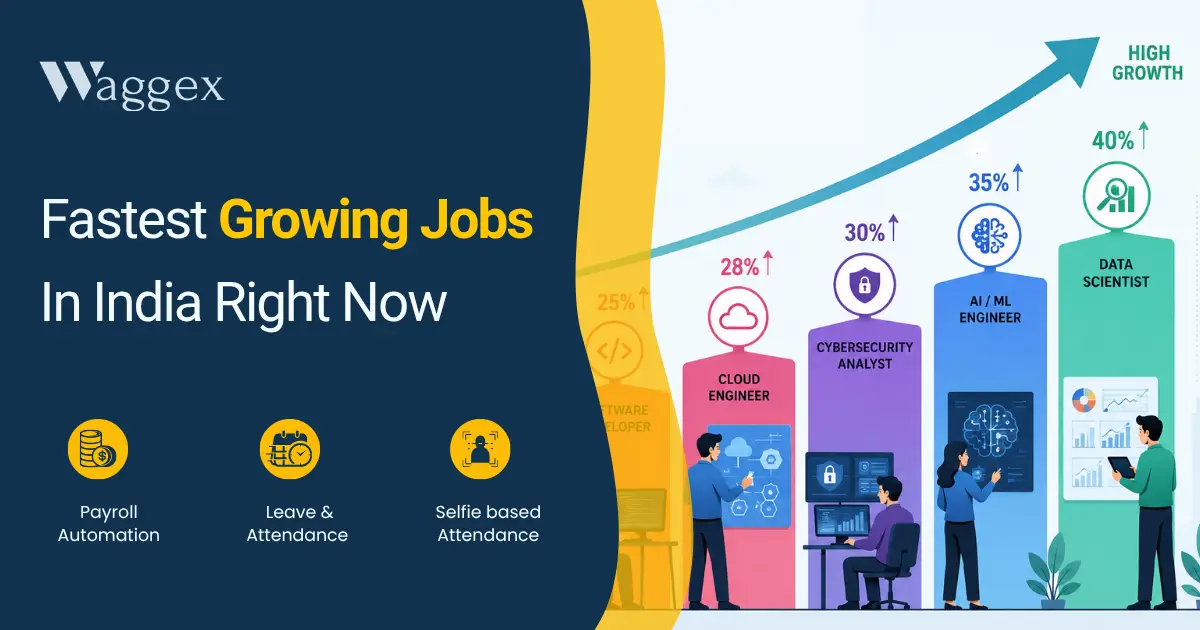
India’s hiring market in 2026 looks very different from last year. Some roles have seen 143% growth in job postings, while cities that were barely on the hiring map two years ago are now among the fastest-growing. And in April 2026, insurance not tech saw the biggest growth in hiring and that was shocking.
This article uses data from trusted sources, including the Naukri JobSpeak Index, LinkedIn’s Jobs on the Rise 2026, ManpowerGroup’s Employment Outlook Survey, NASSCOM, Taggd, and the GCC Index India 2026. Unless stated otherwise, all growth figures are year-on-year increases in job postings.
| The headline numbers before we get into individual roles: White-collar hiring grew +6% YoY in June 2026. The Naukri JobSpeak Index hit 3,027 highest on record. 74% of Indian employers plan to increase headcount in H1 2026, the highest rate of any country in ManpowerGroup’s global survey. AI/ML hiring has grown 32–34% every single month from December 2025 through June 2026 it’s not a spike. And 80% of employers now prioritise skills over degrees when hiring. |
Tech Job Roles That Saw Highest Growth
| 1. AI / ML Engineer ↑ 143% more job postings YoY 💰 ₹18–45 LPA (mid) · ₹45–90 LPA (senior) 📍 Bengaluru · Hyderabad · Pune 143% is the steepest climb of any role category in India. Not 43%, not 43 a hundred and forty three percent. LinkedIn tracked this across millions of job postings and it’s the single number that captures what’s happening to the Indian job market right now. The demand comes from two directions. Indian product companies Flipkart, PhonePe, CRED, Meesho are building AI into their core product and need engineers who can actually ship models to production, not just run experiments. And Global Capability Centres of international companies are staffing entire AI teams out of India for their global parent companies. GCCs alone account for a significant share of senior AI/ML hiring. The pay gap between ‘ran notebooks’ and ‘deployed models in production at scale’ is enormous. Mid-level engineers with real production experience are getting ₹25–45 LPA. Senior engineers at 5–8 years in production ML: ₹45–90 LPA. Bengaluru has the highest volume but Hyderabad and Pune are growing fast. Skills that matter right now: MLOps, LLM fine-tuning, Python, PyTorch, AWS SageMaker or GCP Vertex. 📊 Source: LinkedIn Jobs on the Rise 2026 |
| 2. DevSecOps Engineer ↑ 72% more job postings YoY 💰 ₹16–40 LPA · mid-level salaries up 25–35% YoY 📍 Bengaluru · Chennai · Hyderabad Security used to be checked at the end of software development. DevSecOps means building it into every stage code review, CI/CD pipeline, deployment. Cloud adoption surged, breaches followed, and companies couldn’t afford to keep doing security as an afterthought. BFSI companies are the heaviest hirers because regulatory pressure on data security in banking and insurance is at an all-time high. GCCs are close behind. The Manpower India 2026 report showed mid-level salaries in security roles jumped 25–35% year-on-year not because companies suddenly became generous, but because qualified people are genuinely scarce. CISSP, CEH, and CompTIA Security+ certifications carry significant weight at the hiring stage. 📊 Source: LinkedIn Jobs on the Rise 2026 |
| 3. Data Engineer ↑ 58% more job postings YoY 💰 ₹18–38 LPA at 2–5 years’ experience 📍 Bengaluru · Hyderabad · Pune Every company got excited about AI. Then they discovered their data was scattered across five different systems, half of it inconsistent, and none of it in a format their models could actually use. Data engineers build and maintain the pipelines that make AI initiatives possible and they’re in shorter supply than data scientists because the role got less attention during the ‘data science boom’ years. At ₹18–38 LPA for just 2–5 years of experience, the pay is well above the national tech median. Tools that are opening doors right now: Apache Spark, dbt, Airflow, Snowflake, BigQuery, Databricks. Companies aren’t looking for people who know all of these they want people who understand data pipelines deeply and can pick up new tools quickly. 📊 Source: LinkedIn India / Naukri JobSpeak 2026 |
| 4. Cloud Architect ↑ ~50% demand growth 💰 ₹25–60 LPA 📍 Pan-India · GCC hubs in Bengaluru, Hyderabad, Pune Every company migrating infrastructure to cloud needs someone who knows what they’re doing at a system design level not just someone who can set up an EC2 instance. Cloud architects design the entire approach: which services, how they connect, how they scale, how they fail safely. AWS, Azure, and GCP certifications at the Solutions Architect or Professional level have near-100% placement rates in India right now. The pay gap between a cloud engineer and a cloud architect is often ₹10–20 LPA for the same years of experience. The difference is the ability to make design decisions, not just implement them. 📊 Source: Manpower India Employment Outlook 2026 |
| 5. Cybersecurity Analyst / Penetration Tester ↑ 25–35% salary growth YoY 💰 ₹12–35 LPA 📍 Bengaluru · Mumbai · Delhi NCR The talent shortage in cybersecurity is acute enough that companies are offering unsolicited salary hikes to retain existing staff not just at hiring time. Manpower India’s 2026 report specifically called out security analysts and penetration testers as roles where pay is rising faster than almost any other function. The DPDP Act 2023 is a tailwind here. Companies now have regulatory reasons to take data security seriously, not just operational ones. A breach isn’t just a technical problem anymore it’s a compliance event with legal consequences. This is pushing even mid-size companies to hire security expertise they would have outsourced before. Entry point: ₹12–15 LPA with CEH or CompTIA Security+. Senior roles with cloud security experience: ₹28–35 LPA. |
Non Tech Jobs That Saw Highest Grwoth
| 6. BPO / ITES Roles ↑ +21% sector hiring YoY · Fresher hiring +39% 💰 ₹3–8 LPA entry · ₹10–20 LPA with experience 📍 Jaipur (+66%) · Ahmedabad (+43%) · Kochi · Coimbatore January 2026’s Naukri JobSpeak report had one genuinely surprising number: foreign MNCs drove over 80% of BPO hiring growth, and most of it happened outside metros. Jaipur posted 66% year-on-year growth. Ahmedabad posted 43%. This isn’t companies settling for second-best locations, it’s a deliberate strategy to access English-proficient talent in markets where attrition is lower and salaries are more competitive. For first-time job seekers, BPO remains one of the most accessible entry points in India’s formal job market. Fresher hiring grew 39% year-on-year the highest of any experience band in the sector. Skills that move people up faster: advanced English, basic Excel, and familiarity with CRM tools. 📊 Source: Naukri JobSpeak January 2026 |
| 7. Insurance Sector Underwriting, Sales, Claims Tech ↑ +21% fastest non-IT sector in April 2026 💰 ₹4–15 LPA · actuarial and senior underwriting up to ₹40 LPA 📍 Mumbai · Delhi NCR · Hyderabad India’s insurance penetration is still well below global averages which means the growth runway is long. April 2026’s JobSpeak report named insurance the fastest-growing sector for that month at +21%, ahead of every tech sub-sector tracked. What’s driving it: new product launches (especially health insurance post-pandemic), regulatory expansion into rural markets, and the digitalisation of distribution and claims. Roles in tech, analytics, and digital sales are growing fastest within the sector. Pay range is wide ₹4 LPA for an entry field sales role, ₹40 LPA for an experienced actuarial analyst. Actuarial science graduates are in particular demand and have consistently high placement rates. 📊 Source: Naukri JobSpeak April 2026 |
| 8. Healthcare Doctors, Nurses, Health Tech, Admin ↑ +5% YoY · 55,000+ new jobs forecast in 2026 alone 💰 ₹6–25 LPA · specialist roles higher 📍 Pune (+23%) · Chennai · Bengaluru Healthcare doesn’t get the same headlines as AI, but the numbers are consistent in a way that tech isn’t always. The sector has posted positive hiring growth in every monthly Naukri report this year. Fresher hiring in healthcare grew 11% year-on-year the highest of any experience band. Manpower India projects 55,000+ new healthcare jobs in 2026 alone. The structural driver: India’s formal healthcare capacity is significantly below what a country of 1.4 billion people needs. Hospital chains are expanding into Tier-2 cities. Health-tech startups are formalising services that were informal before. And the ABHA digital health ID is creating a data layer that’s generating demand for health data analysts and tech roles within hospitals that didn’t exist before. 16% CAGR over the medium term makes this one of the more reliable long-term career choices. |
| 9. Solar / Renewable Energy Engineer ↑ Green jobs up 30% · 38,500 new jobs from PLI scheme alone 💰 ₹6–20 LPA · senior project leads higher 📍 Delhi NCR · Bengaluru · Mumbai · Gujarat India’s 500 GW renewable energy target by 2030 is generating real jobs, not just policy documents. The India Decoding Jobs Report 2026 projects 38,500 new jobs in the electricity sector from the PLI scheme for solar PV modules alone. The broader green jobs number from Taggd’s report: 30% sector growth year-on-year. EPC project managers, solar consultants, sustainability analysts, and EV battery technicians are all in the top-10 fastest-growing job titles within this sector. The pay isn’t at AI engineer levels, but the demand is structural and long-term in a way that few other sectors can claim. For engineers especially electrical and mechanical pivoting toward renewable energy is arguably the clearest structural career bet of this decade. 📊 Source: India Decoding Jobs Report 2026 + Taggd India 2026 |
| 10. GCC Roles Finance, Analytics, Tech, HR ↑ 1.9 million currently employed · 900,000 new jobs forecast by 2030 💰 ₹12–45 LPA · 25–60% above equivalent IT services pay 📍 Bengaluru · Hyderabad · Pune · Chennai Global Capability Centres have quietly become the most attractive employer category in India. More than 1,760 GCCs now operate here, employing 1.9 million people. The GCC Index India 2026 forecasts another 900,000 jobs by 2030 across finance, analytics, tech, HR, legal, and supply chain. What makes GCC roles stand out isn’t just pay (though 25–60% above IT services for comparable roles is significant). It’s career trajectory. Senior IC to VP paths that used to stop in India now increasingly lead to global P&L roles at parent companies. Several Indian-origin executives moved from country head to global CTO or CPO in 2025–26 alone. One practical note: many GCC roles never appear on Naukri. They’re filled through LinkedIn outreach, referrals, and campus partnerships. If you’re targeting GCCs specifically, having a strong LinkedIn profile and reaching out directly to talent acquisition teams at specific GCCs is more effective than waiting for a Naukri posting. 📊 Source: GCC Index India 2026 |
| 11. Digital Marketing Specialist ↑ 25%+ demand growth · remote-heavy 💰 ₹4–16 LPA · senior performance marketers ₹20 LPA+ 📍 Pan-India · strong remote availability D2C brands, quick commerce companies, ed-tech, and fintech are all scaling digital marketing aggressively and the talent pool at mid-to-senior level is thin. Performance marketing (paid search, paid social, CRO) pays significantly more than content or SEO-only roles. The roles that are genuinely hard to fill: growth marketers who can read analytics, run experiments, and connect marketing activity to revenue. This is also one of the most remote-friendly categories in India’s job market. Tier-2 and Tier-3 city candidates with strong digital skills are getting hired at salaries that would have required a metro move two years ago. Skills that make the difference: Google Analytics 4, Meta Ads, performance attribution, basic SQL for pulling your own data. 📊 Source: NASSCOM / LinkedIn India 2026 |
Three Things Worth Saying Out Loud
Tier-2 cities are not a fallback anymore. Jaipur grew 66% in BPO hiring. Ahmedabad grew 43%. Coimbatore and Kochi are active GCC hiring markets. Companies are deliberately moving headcount to lower-cost, lower-attrition markets not because they can’t attract metro talent, but because the math works better. If you’re open to a non-metro location, 2026 is the year this translates into real career opportunity.
Skills over degrees is now a hard policy, not a talking point. 80% of Indian employers now say they prioritise skills over degrees in hiring decisions, per ManpowerGroup’s 2026 survey. A cloud certification, a portfolio with a real ML project, or demonstrable performance marketing results are opening doors that a generic engineering degree alone wouldn’t open. This shift started during the pandemic and has accelerated every year since.
AI fluency is becoming a baseline, not a specialisation. The fastest-growing job title is AI/ML Engineer. But what’s quieter and more important: employers across finance, HR, marketing, and operations are now screening for whether candidates can work with AI tools. The people getting the best offers in 2026 often aren’t AI specialists, they’re domain experts (finance, sales, HR) who also know how to use AI systems in their day-to-day work.
All sources linked: Naukri JobSpeak Index · LinkedIn Jobs on the Rise 2026 · ManpowerGroup Employment Outlook 2026 · Taggd India Decoding Jobs Report 2026 · GCC Index India 2026 · NASSCOM India IT Report